

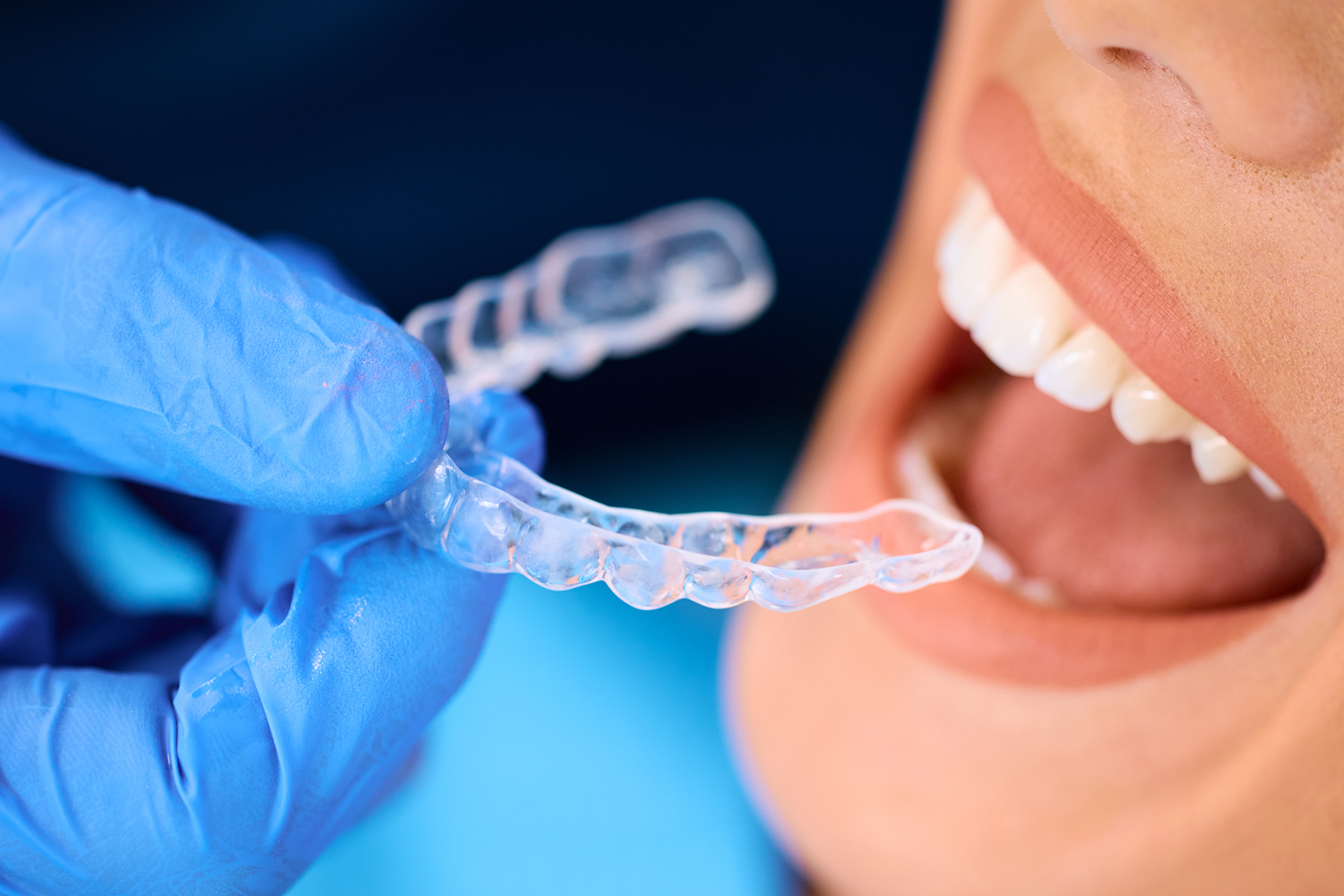
Maybe your partner says you sound like a coffee grinder at 2 a.m. Maybe your dentist spotted worn-down spots on your molars. Or maybe you keep waking up with a jaw that feels like it worked the night shift. However you found out you grind your teeth, you now face a choice. Your dentist can make you a custom night guard, which may cost $500 or more, or you can order one online for a fraction of the price. These seem to do the same thing with very different price tags, so what are you really paying for? The answer comes down to one word: fit. And this shapes everything from comfort to how long your teeth stay protected.

Why Night Guards Matter in the First Place
Clenching and grinding teeth, also known as bruxism, is common. A 2024 meta-analysis found that about 21% of people worldwide grind their teeth during sleep, and the rate in North America was even higher at 31%. Because it happens during sleep, many people have no idea they do it until damage shows up.
Over time, that damage adds up. Grinding wears down enamel, chips and cracks teeth, strains the jaw joint, and can trigger morning headaches. Enamel does not grow back, so protecting it matters. Grinding can also cause damage to expensive dental work like crowns and veneers.
A night guard works like a cushion between the upper and lower teeth. It absorbs grinding forces so the plastic wears down instead of the teeth, protecting both top and bottom teeth from the damage caused by teeth grinding.
What Makes a Custom Night Guard Different
A custom night guard starts with an exact copy of the patient’s mouth. The dentist takes a physical impression or a 3D digital scan, and then a dental lab builds the guard to match every ridge and groove of the patient’s teeth. At a follow-up visit, the dentist checks the fit and adjusts it as needed.
That process affects nearly everything about how the guard performs.
Fit.
A custom guard snaps into place and stays put all night. It does not shift, rock, or fall out. Because it hugs the teeth closely, it can also be made thinner and less bulky, which makes it easier to sleep in.
Bite alignment. This is the difference patients cannot see but often feel. The dentist designs the biting surface so the jaw closes evenly, with pressure spread across all the teeth. A guard that puts uneven pressure on a few teeth can leave the jaw feeling worse, not better.
Materials and thickness. Custom guards are made from dense, durable materials matched to how hard the patient grinds. Heavy grinders may get a hard acrylic guard, while lighter grinders may do well with a hybrid design that pairs a soft inner layer with a hard outer shell. The dentist also controls the thickness, usually 1 to 3 millimeters, based on the patient’s needs.
Durability. With good care, a custom guard often lasts two to five years. That changes the way you might think about the cost of a nightguard from the dentist. A $500 guard that lasts five years costs less per year than a $30 guard that needs to be replaced every few months.
Getting a Night Guard From the Dentist vs. Online
Over-the-counter guards have real advantages: they cost $15 to $50, require no appointment, and are available the same day. Most use a boil-and-bite design. The wearer softens the guard in hot water, bites down, and lets it harden into a rough copy of their teeth.
The key word is “rough.” The final shape depends on how evenly the person bites during those few seconds, and the fit is loose at best. These guards also tend to be bulkier and made from softer plastic that wears through faster. Some dentists caution that soft, squishy guards can even cause patients to grind more, since the jaw wants to chew on them. Most importantly, no over-the-counter product is designed around an individual’s bite, so the pressure across the teeth is left to chance.
Online companies that mail impression kits fall somewhere in the middle. The fit is closer to custom, but no dentist examines the mouth first, confirms the guard fits correctly, or checks whether grinding has another cause that needs attention, such as a sleep disorder.
When a Cheaper Guard Might Be Enough
An over-the-counter model can be a reasonable short-term choice for a teeth grinding guard. People who clench only occasionally, who are waiting for a custom guard to arrive, or who want to test whether they can tolerate sleeping with a guard may find a store-bought version fills the gap. Anyone with diagnosed bruxism, heavy wear, jaw pain, crowns, or other dental work is usually better served by a professional option.
What to Ask the Dentist About Nightguards
Patients comparing options can bring a few questions to their dentist:
- How severe is my grinding, and what is it doing to my teeth?
- What material and thickness do you recommend for me, and why?
- How long should this guard last?
- Will my insurance cover part of a custom guard?
- Is a short-term over-the-counter guard safe for me while I decide?
Both types of guards put a barrier between the teeth, but only one is built around a specific person’s mouth and bite. For occasional clenching, a drugstore guard may do the job for a while. For long-term protection against a lifetime habit, most patients find the custom version is worth the investment. A conversation with a dentist is the best place to start. Use our online appointment tool to find a dentist near you.