Maybe you have seen an ad promising a brand-new smile with little or no drilling. Phrases like “prepless crowns” or “no-prep dental crowns” show up a lot in cosmetic dentistry marketing. The idea sounds great. Who would not want a new tooth without the usual shaving and reshaping? However, traditional crowns typically require reshaping the tooth so the restoration fits securely, making claims that a crown can be placed with little or no prep confusing.
So, what do dentists really mean by “prepless?”
In short, “no-prep” means the dentist bonds a thin layer of material over the existing tooth instead of trimming the tooth down to make room. This type of crown can be an effective, more conservative option for cosmetic concerns. It is not the best choice for every tooth, though.
Here is a closer look so you will know how to get the most effective treatment.
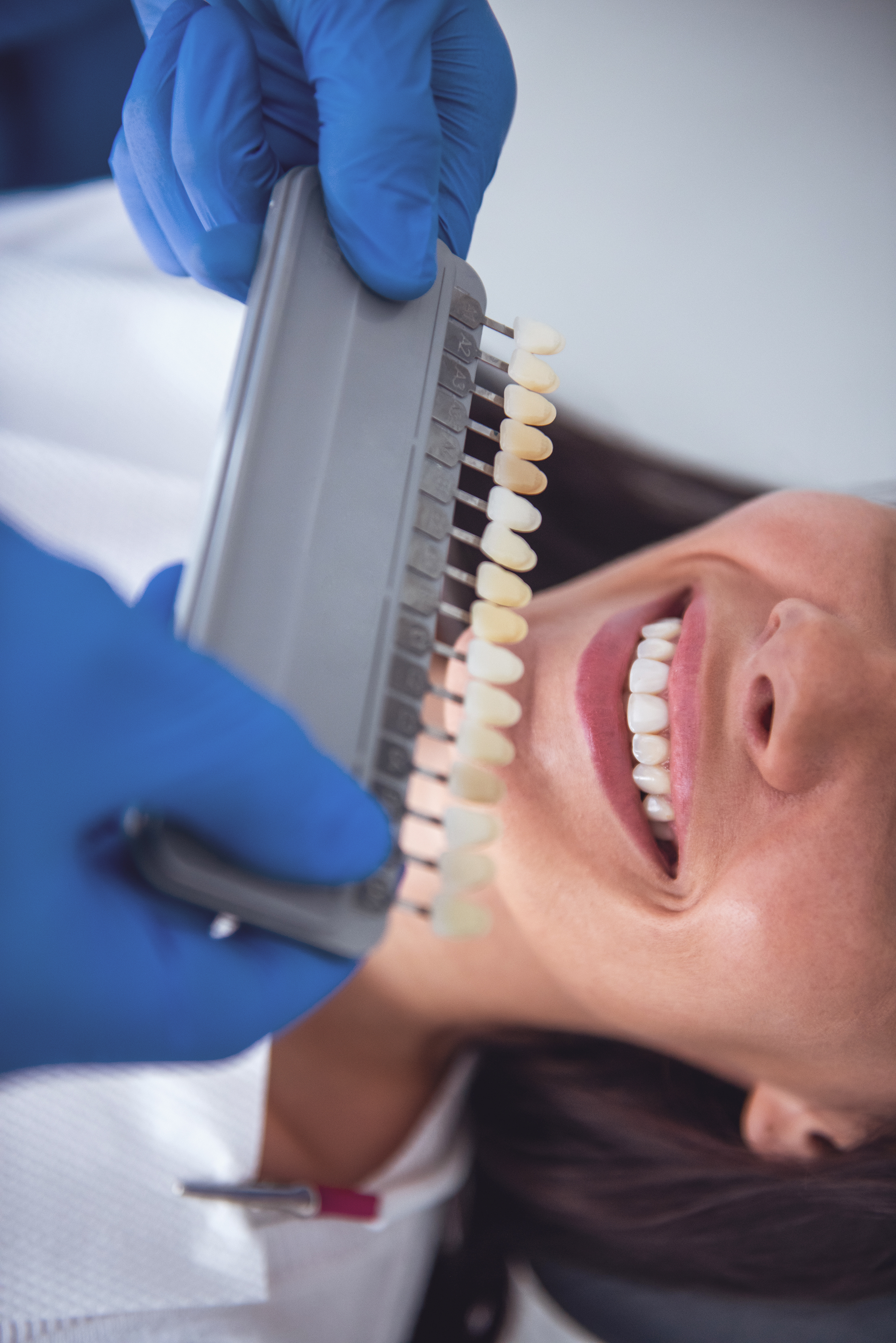
What is a Traditional Dental Crown?
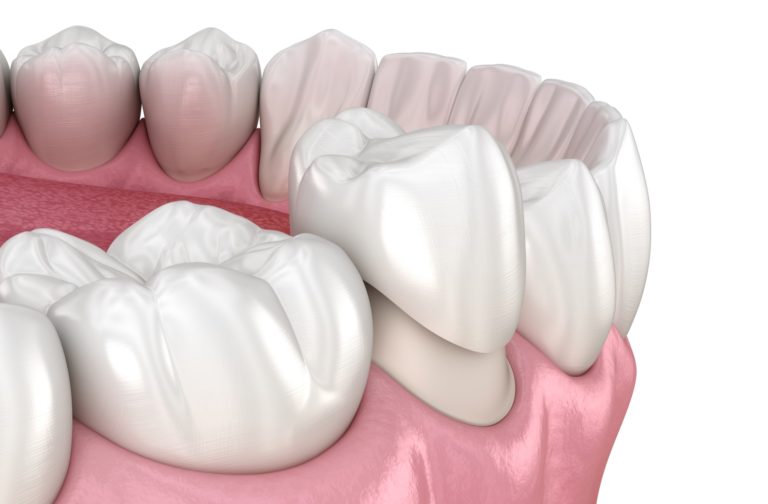
A crown is a cap that covers the whole top part of a tooth. To place a standard crown, the dentist removes some of the outer tooth surface, usually about one to two millimeters all the way around. This step is called the “prep.” Reshaping the tooth makes room for the crown so it fits snugly, lines up with the bite, and does not look or feel bulky. Because so much of the tooth is reshaped, a standard crown is a strong choice when a tooth is badly cracked, heavily decayed, or has had a root canal. The crown provides the structure the tooth needs to stay strong and healthy.
Can You Really Get a “Prepless” Crown?
“Prepless” or “minimal-prep” describes a restoration that needs little or no reshaping of the natural tooth. Instead of trimming the tooth down, the dentist bonds a thin shell of porcelain or a similar material over the tooth that is already there. Less prep means the underlying tooth needs to be healthy, so this type of crown can only be used to cover minor damage or address cosmetic concerns.
This approach is closely related to veneers, thin covers placed on the front of teeth. Veneers have earned a strong reputation in cosmetic dentistry, and some marketing blurs the line between veneers and crowns. So a “prepless crown” is often closer to a veneer or a partial cover than a full traditional crown.
How Minimal-prep Crowns are Designed to Fit
Because little tooth is removed, minimal-prep crowns rely on strong dental bonding to stay in place. The dentist cleans and lightly treats the surface of the enamel, then uses a special adhesive to attach the thin porcelain.
The new material adds a little thickness. If a tooth is already small, worn down, or has gaps around it, there is room to add that layer without making the tooth look too big. If the tooth is already full-sized, adding material on top can make it look bulky or crowd the bite.
When a No-prep Dental Crown Might Be Considered
A minimal-prep crown works best when the teeth are fairly healthy. Unlike a tooth that needs a crown after a cavity or crack, these teeth are basically sound. The goal is to improve their appearance, or to rebuild teeth worn down over time, rather than to repair major damage or decay.
Good situations for a prepless crown may include teeth that are:
| Slightly small | Worn from light grinding | Lightly spaced or uneven |
In these cases, the dentist is adding to the tooth rather than rebuilding a damaged one.
Adding a crown without shaving the tooth preserves more natural enamel, and less of the tooth is permanently changed. The no-prep procedure is faster and patients may experience less sensitivity afterwards compared with traditional crowns.
Prepless Crown Limitations
Dentists weigh several practical factors before recommending a prepless crown.
| Tooth shape and size. | There needs to be enough room to add a thin layer without the tooth looking oversized. For full-sized teeth, a traditional crown may be more appropriate. |
| The bite | How the upper and lower teeth meet matters. Extra thickness can change the way teeth touch, which may affect comfort and wear over time. When a patient’s bite leaves little room to spare, a traditional crown shaped to fit the bite is often the better choice. |
| Enough healthy enamel | Strong bonding needs solid enamel to grip. Teeth with large fillings, deep decay, or a lot of damage may not hold a bonded restoration well and instead require a full crown. |
| Habits like grinding | Patients who clench or grind put heavy force on their teeth, which can chip or loosen a thin restoration. Traditional crowns hold up better to this kind of wear. |
| Overall tooth health | When a tooth is structurally weak due to cracks, deep restorations, or a root canal, a full traditional crown that wraps and protects the whole tooth is usually the safer choice. |
Research backs this up. A 2025 systematic review found that teeth with only minor damage can be fixed with conservative methods, while teeth that have lost a lot of their structure do better with a full crown, which gives stronger protection against breaking and other damage.
How They Compare Over the Long Run
Prepless and traditional crowns each have strengths, and the right comparison comes down to durability, appearance, and how each performs over time.
Prepless Crown
Traditional Crown
| Durability | Thinner and held by bonding; can chip or loosen if the case is not a good fit | Covers the whole tooth and handles heavy chewing; stronger for damaged teeth |
| Appearance | Very natural on the right tooth, but can look bulky on the wrong one | Natural and consistent, since the crown is shaped to fit the tooth and bite perfectly |
| Long-term outcomes | Best for healthy teeth being improved for looks; success depends heavily on choosing the right case | Reliable for teeth that are cracked, decayed, or worn down and need full protection |
The biggest factor is not the marketing name. It is whether the tooth and the patient’s bite are a good fit, and that comes down to a conversation with your dentist.
Be a “Prepared” Patient
“Prepless” is not a one-size-fits-all answer. It describes a more conservative way to improve certain teeth when the conditions are right. Patients who see these ads should feel comfortable asking a few simple questions: Is this truly a crown or more like a veneer? How much of my tooth will be removed? Am I a good candidate, and why? A good dentist will welcome those questions and explain the choice in plain terms.
If you don’t have a regular dentist, use our online scheduling tool now to find a dentist near you.