


It happens to a lot of people the same way: you’re looking at a photo of yourself or checking your reflection in the mirror, and there it is. One tooth suddenly looks darker than the others. The darker tone could be grey, yellow, or even brown, and because it looks different than the rest of your smile, it’s difficult to ignore. Your first instinct might be to buy whitening strips. But a single discolored tooth is usually not caused by everyday staining. It can be the first sign of a problem inside the tooth, which is why it calls for a dentist’s exam.
One Dark Tooth Is Not the Same as Overall Yellowing
It is common for adults’ teeth to become stained over time. The usual suspects are habits like drinking dark drinks like coffee, tea, and red wine, or smoking cigarettes and cigars. These can cause surface staining that responds well to regular dental cleanings and teeth whitening treatments.
A single dark tooth is different. When one tooth starts turning grey or brown on its own, the cause is often inside the tooth, not on the surface. Over-the-counter whitening strips work on the outer enamel, so they rarely fix this problem. In fact, strips also whiten the surrounding teeth and might make the dark tooth stand out even more.
Common Causes of a Single Dark Tooth
There are several reasons a patient might have one tooth that starts turning grey or yellow, and they all should prompt a visit to the dentist.
Past injury. When a sports injury or other accident involves the mouth, the trauma can damage the blood vessels inside a tooth. Blood may leak into the tiny tubes within the tooth and darken it, even if the tooth stays alive and healthy. Dental injuries like these are more common than most people realize. A national survey found that about one in four Americans between the ages of 6 and 50 had evidence of trauma to a front tooth.
Calcification. After an injury, some teeth respond by building extra hard tissue inside the tooth. This extra layer can give the tooth a darker yellow color compared to its neighbors.
A dying or dead nerve. Sometimes a tooth darkens because the nerve inside it is dying. When this is caused by past tooth trauma, darkening often happens without any pain, and the change may not show up right away. Problems with the nerve can appear years after an injury occurred, and in many cases, a darkening tooth is the only sign. Nerve problems can also be caused by deep decay, severe gum disease, or large and repeated dental work.
Tooth decay or a leaking filling. A cavity, especially one hidden between teeth or on the back of a tooth, can make a tooth look gray or brown. An older metal filling or crown can also leak or discolor over time, changing the shade of the whole tooth.
Materials from a past root canal. A tooth that had a root canal years ago may darken later. Leftover tissue, filling materials, or the sealing cement inside the tooth can all affect its color.
When Kids Have a Dark Tooth
A baby tooth that darkens after a fall is common and often needs no treatment since the tooth will eventually fall out on its own. The dentist may simply monitor it to make sure there’s no cavity. A darkened permanent tooth in a child, however, should be evaluated the same way as it would for an adult. Either way, a quick dental visit is the safest step.
What the Dentist Will Look For
Because so many different problems can cause one dark tooth, the first step is finding out what is going on inside it. The dentist will examine the tooth, ask about past injuries, and usually test whether the nerve is still alive.
An X-ray to look inside the tooth is a key part of this visit, since a dead or dying nerve may have no symptoms other than a color change. The X-ray can also reveal hidden decay, a failing filling, an infection at the root, or changes inside the tooth that the eye cannot see.
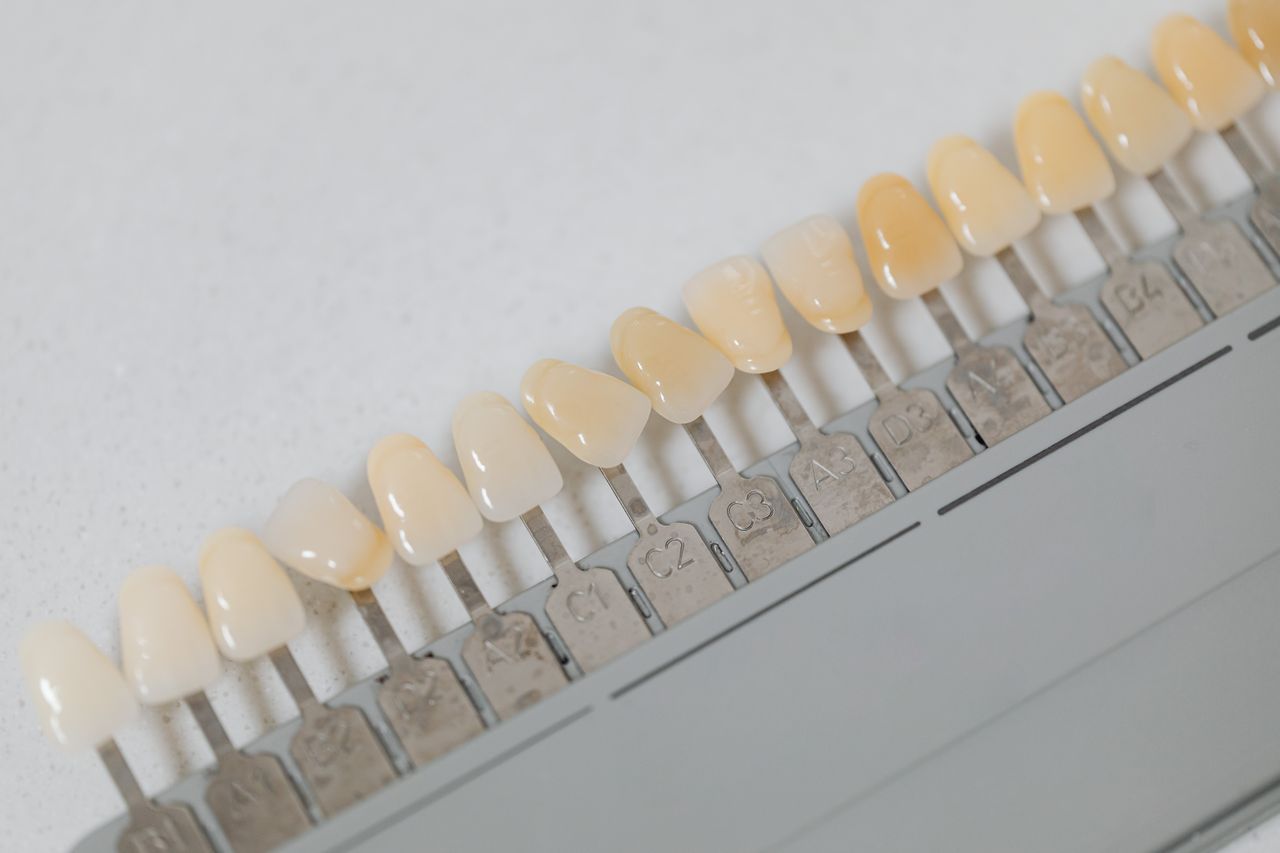
How Dentists Treat a Single Discolored Tooth
Treating a dark tooth depends on what is causing the discoloration, and dentists have several options.
Single-tooth bleaching. If the tooth is healthy, the dentist can make a custom tray that whitens only the dark tooth. The patient wears the tray at home with a mild bleaching gel until the shade matches the surrounding teeth. This process takes about 8 weeks on average, though it varies from patient to patient. Bleaching is usually the most conservative whitening option because it preserves the natural tooth.
Internal bleaching. For a tooth that has had root canal treatment, the dentist can place a bleaching agent inside the tooth itself. This is sometimes combined with at-home tray whitening for the best color match.
Bonding. When whitening is not enough, the dentist may recommend bonding. This involves applying a tooth-colored resin over the dark area to match the color of the surrounding teeth. Bonding can also be used after bleaching to fine-tune the final shade.
Veneers. Veneers cover the front of the tooth with a thin porcelain material matched to the color of the surrounding teeth. Because they cover the enamel, veneers can mask deep discoloration that bleaching cannot fully correct. Veneers do, however, require removing some of the tooth’s surface before the porcelain is applied.
Crowns. A crown covers the entire tooth. Dentists usually reserve crowns for teeth that have extensive decay, since placing one requires removing healthy tooth material.
Root canal treatment. If testing shows an infection or if the nerve has died, the dentist may recommend root canal treatment. Once the tooth is treated, it can often be bleached and restored to match the rest of the smile, or capped with a crown.
Do Not Wait to Have a Dark Tooth Checked
A single dark tooth is not always an emergency, but it should always be checked by a dentist. Sometimes the cause is harmless. Other times, the color change is the only warning sign of a dying nerve, hidden decay, or a filling that is failing. The sooner the dentist finds the cause, the more treatment options the patient will have, and the more likely a simple, conservative fix will do the job.
To find a dentist near you, try our online appointment scheduler.