

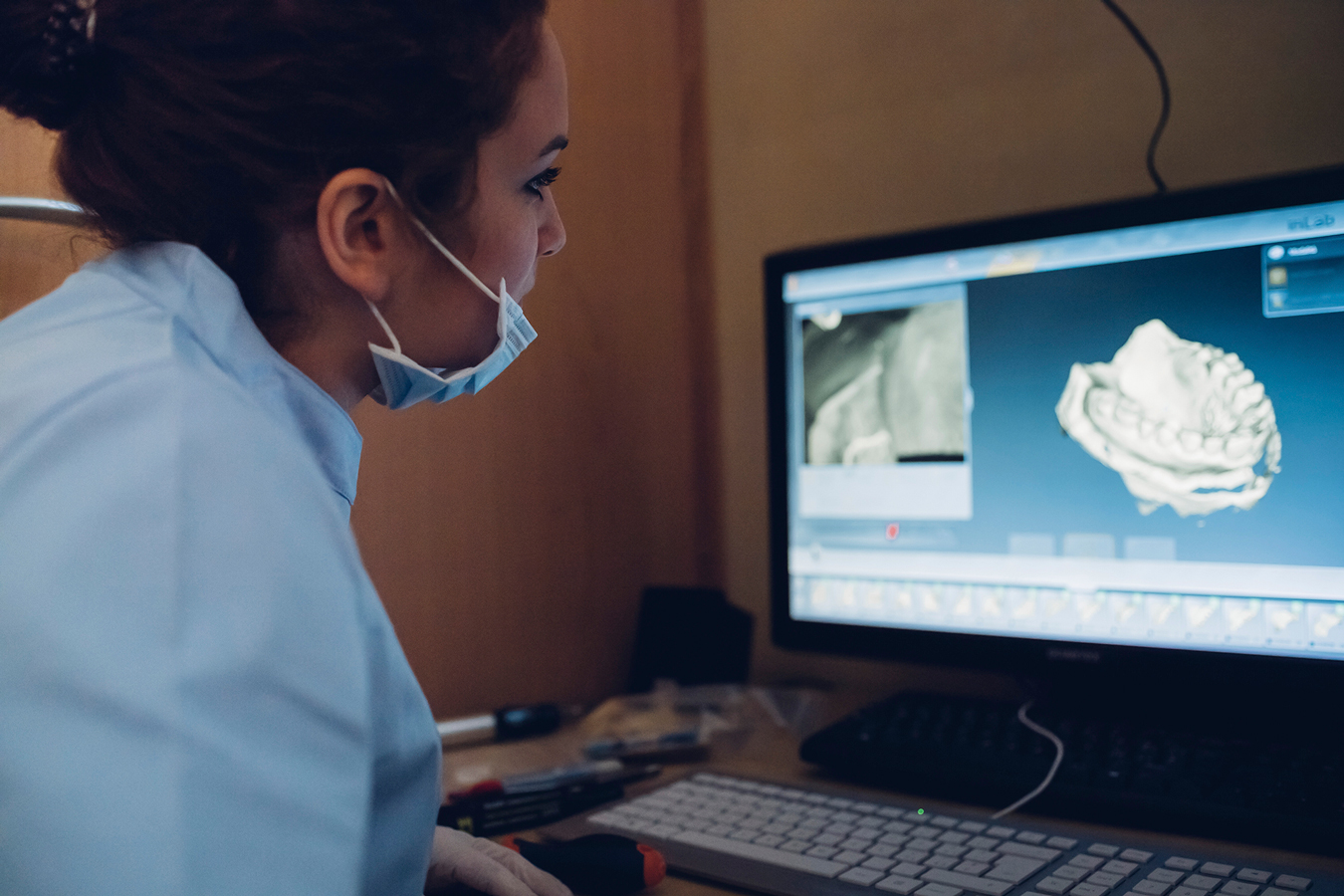
Dealing with dental problems and preparing for dental procedures is already stressful and expensive. When a dentist says that a special 3D scan is necessary before getting a procedure, many patients wonder if it’s really necessary, especially if traditional x-rays have already been taken.
The reality is that 3D dental scans can tell a dentist a lot more about teeth, gums, bones, and other structures around the mouth than a normal 2D x-ray. These scans help dentists and oral surgeons provide better, more accurate, and potentially less painful treatment.
What Are Cone Beam Computed Tomography Scans?
The most commonly used type of 3D dental scan is the cone beam computed tomography (CBCT) scan. Dental CBCT scans use a cone-shaped beam of x-rays to take many images of a patient’s mouth from different angles as the device moves around a patient’s head. The images are then compiled with computer software to create a 3D representation of the teeth and surrounding tissues, nerves, and bones.
The scan is quick and painless for patients and provides far more detail than typical dental x-rays. While dental CBCT scans do expose the patient to a bit more radiation than regular dental x-rays, it is still well within safe limits and safer than other medical CT scans.
Other Types of 3D Dental Scans
CBCT scans are often the most useful and cost-effective choice for dental imaging requiring 3D dental scans. However, there are other types of 3D scans that may be used in certain situations.
MRI Scans
Magnetic resonance imaging (MRI) scans are radiation-free, painless 3D scans that use a strong magnet and radio waves instead of x-rays. These are sometimes better for seeing details related to oral cancers and TMJ disorders.
Ultrasounds
Ultrasound technology is another imaging technique that does not use ionizing radiation. Instead, it uses sound waves to create images. Ultrasounds are best for finding problems with saliva glands and soft tissues in the mouth. It can show blood flow, measure tissue growth, and detect inflammation. They are sometimes used to help dentists plan for tooth implants.
Intraoral Scanners
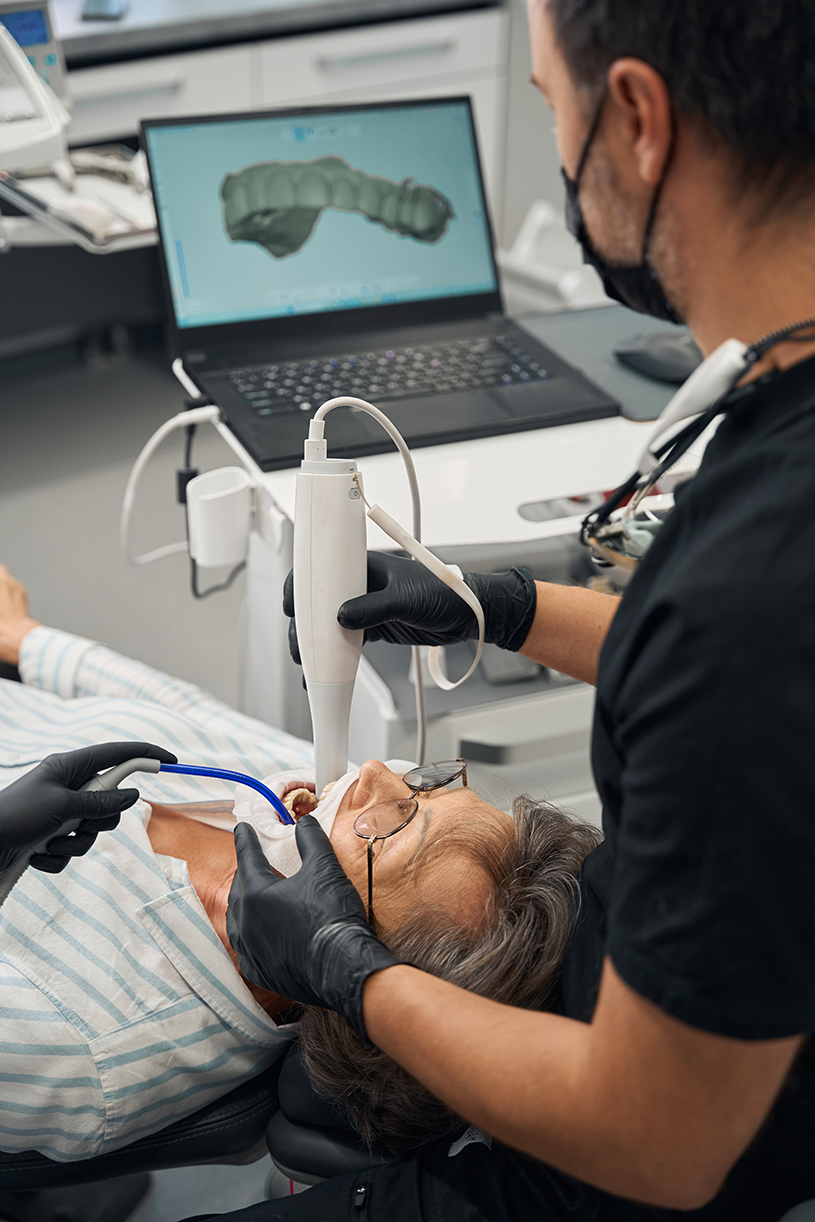
Intraoral scanners are handheld devices that can be moved around inside the mouth to capture 3D images of teeth and oral tissues. The device projects light onto the mouth, and sensors convert the reflection into precise 3D digital models of the teeth and mouth on a computer. These scans can’t see inside teeth and other tissues, so their use is limited. They are typically used to replace physical molds for crowns, aligners, and implants, and result in more accurate and better fitting aligners and restorations. The most widely recognized intraoral scanner is the iTero scanner.
Normal 2D x-rays are typically sufficient for checkups, finding areas that need deeper cleaning, and finding cavities. They can also be used for checking the roots of teeth and bone at a basic level, evaluating when wisdom teeth are coming in, and planning for basic fillings.
When Are 3D Dental Scans Actually Needed?
3D dental scans, like CBCT imaging, are needed when flat 2D x-rays do not show enough detail for safe or accurate treatment. They are usually required for:
Crowns and Root Canals
CBCT dental scans are done before root canals or crowns to assess the severity of the damage or decay. According to research, a CBCT scan can detect 62% more inflammation, infection, or tissue change located at the very tip of a tooth’s root when compared with normal 2D x-rays. They can also help dentists determine how deep a crack in the tooth goes. These scans may also help determine whether a patient actually needs a root canal or if a crown alone will fix the problem.
Orthodontic Treatments
While 3D dental scans are not strictly necessary for orthodontics, they can replace less accurate, messy molds that were more common in the past. This gives orthodontists a more precise view of a patient’s bite and generally leads to better results. 3D scans for Invisalign aligners are especially common and usually done with intraoral iTero scanners.
Dental Implants
3D dental scans are required before a dental implant for safety reasons. They help the dentist or oral surgeon map the jawbone in three dimensions, measure bone density and thickness, and locate vital nerves and sinuses so that they don’t get hit by the implant.
Bone Loss
Early bone loss is often monitored with 2D dental x-rays, but 3D dental scans may be needed to determine if there is additional bone loss in areas that can’t be seen or for bone graft planning, which requires more detail than 2D x-rays can provide.
Finding Hidden Problems
If a patient is experiencing pain or other symptoms that can’t be diagnosed with a visual examination or 2D x-rays, the dentist may request a 3D CBCT scan. A 3D scan can pick up tiny cracks, hidden root canals, tumors, sinus-related issues, and early infections that flat 2D x-rays miss. They may also be used to determine the extent of problems like oral cancers, infections, and decay, which may be only partially visualized in exams or 2D x-rays.
Worried About Upcoming Scans and Dental Work?
A dentist will know when to use 3D dental scans over typical 2D x-rays. If your dentist has suggested getting a 3D dental scan, there is probably a good reason, especially if you have anything beyond a simple cavity. It’s important to remember that these scans are usually done to make sure problems aren’t worse than they look on the surface or to protect other structures during complicated procedures.
The extra expense is usually worth it to make sure teeth and oral health are taken care of properly. However, it may be possible to reduce expenses by getting the scans done at a dental school, with the help of insurance, or with payment plans offered by your dentist.
If you’re concerned about whether you need a 3D dental scan or not, talk to your dentist about your options. They will let you know if you really need a 3D scan, or if there is another option. Use our dentist finding tool to find a dentist or orthodontist near you.