


If you have school-age children, you have probably heard other parents talk about dental sealants, or maybe your child’s dentist has recommended them. Sealants are one of the most common ways to prevent cavities in kids, but many parents still have questions. This guide answers them so you can make the right choice for your child.
What Are Dental Sealants?
Dental sealants are thin, protective coatings applied to the chewing surfaces of the back teeth (the molars and premolars). Back teeth are covered in grooves that help grind up food, but those grooves are also hiding spots for food particles and bacteria. Even careful brushing cannot always reach the deepest pits, which is why molars are where most cavities form.
Sealants seal off those grooves. The dentist paints a liquid resin onto the tooth, almost like clear paint. The liquid flows into the pits and hardens into a smooth, thin barrier that keeps out food and bacteria.
Do Sealants Really Work?
Yes. Both the American Dental Association (ADA) and the Centers for Disease Control and Prevention (CDC) recognize sealants as a reliable way to prevent cavities. According to the CDC, sealants protect against 80% of cavities for two years and continue to protect against 50% of cavities for up to four years. The same report found that children ages 6 to 11 without sealants have almost three times more first molar cavities than children with sealants.
Those are pretty striking statistics, especially when you think about the discomfort and expense of dental fillings over time.
Those numbers also matter because school-age children are in their most cavity-prone years. Permanent teeth are coming in, sugary snacks are everywhere, and many kids are still learning to brush well.
When Should Kids Get Sealants?
Sealants prevent the most cavities when applied soon after the permanent molars come in: around age 6 for the first molars and around age 12 for the second molars. Dentists monitor a young patient’s teeth and seal each molar as it emerges, before decay has a chance to start.
Not every child needs sealants. Some kids have smooth back teeth with shallow grooves, brush well, and eat a healthy diet. Sealants make the most sense for children with deep grooves in their back teeth, a sweet tooth, a history of cavities, or brushing habits that still need work. A dentist can weigh these factors and recommend whether sealants are a good fit.
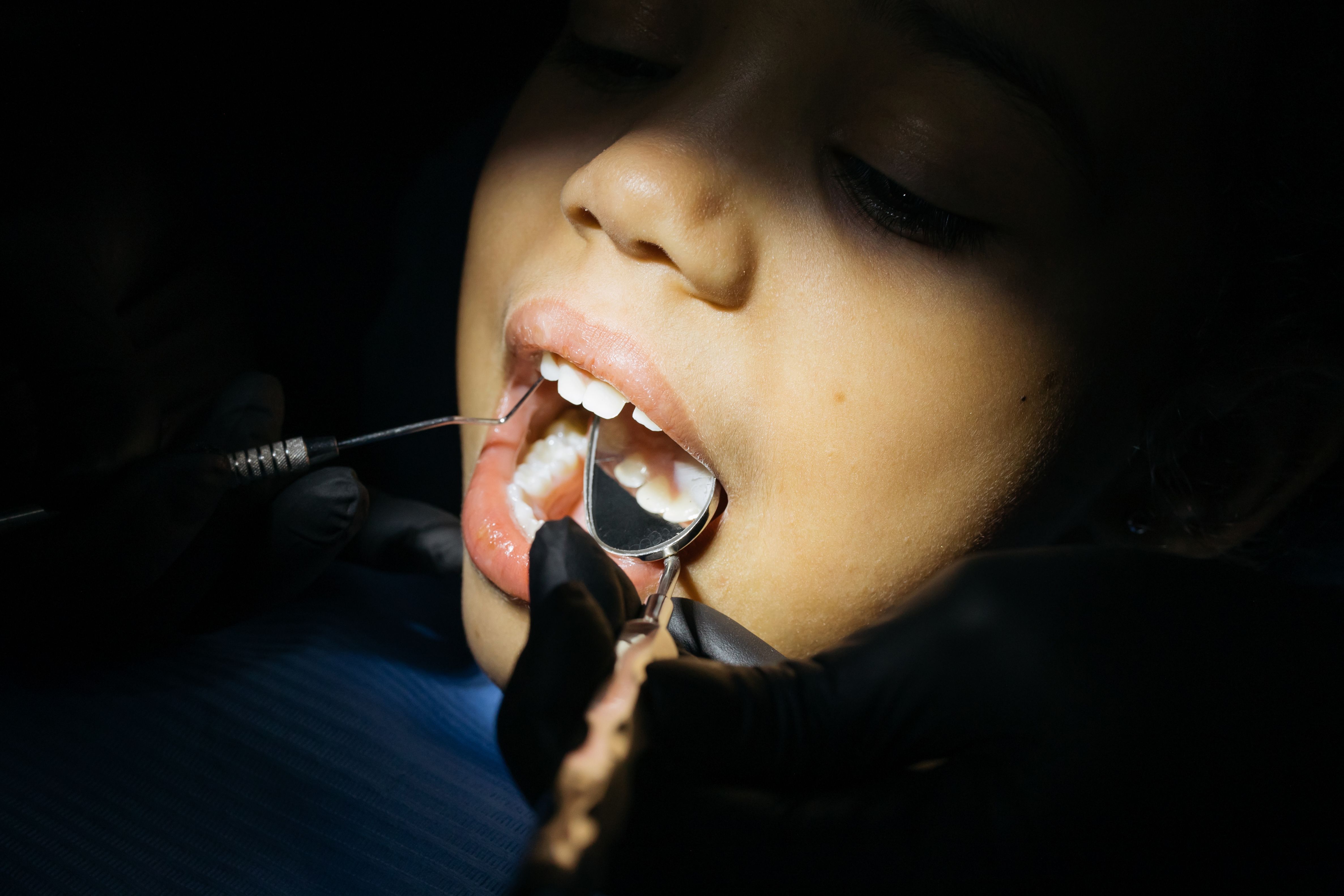
Can Sealants Go on Baby Teeth?
Yes. There is no age restriction, and cavities can form in baby teeth just as easily as in adult teeth. Still, sealants on baby teeth are less common. The procedure requires the child to sit still, which is hard for very young kids, so dentists usually wait until the permanent molars arrive around age 6 to 8. If a young child is especially cavity-prone, a dentist may recommend sealing the baby molars, and a pediatric dentist can make the visit easier for small children.
What Are Sealants Made Of? Are They Safe?
Most sealants are made from a composite resin, a medical-grade plastic that hardens into a clear or tooth-colored coating. Some dentists use glass ionomer sealants instead, which can release small amounts of fluoride to strengthen the tooth. The materials are biocompatible and have been studied for decades.
Some parents worry about BPA, a compound found in many plastics. While some sealants contain trace amounts, the ADA has found the exposure to be far below unsafe levels. People get more BPA from air, dust, and paper receipts than from sealants, and many modern sealants are BPA-free. The only notable risk is a rare allergic reaction to the material.
What is Getting Sealants Like?
Getting sealants is quick and painless. There is no drilling and no numbing, and the visit is often combined with a regular cleaning and checkup. The dentist first examines and cleans the teeth, treating any cavities before sealing begins. Next, a special gel roughens the tooth surface so the sealant can bond, then the tooth is rinsed and dried. The dentist paints on the liquid sealant and hardens it with a special curing light. Each tooth takes only a few minutes.
Afterward, there are no restrictions. Patients can eat, drink, and return to school right away. Sealed teeth may feel a little smoother at first, but most kids stop noticing them within a few days.
Dental Sealant FAQs
What are dental sealants? Sealants are thin, protective coatings applied to the chewing surfaces of back teeth. They harden into a clear barrier that keeps out the food and bacteria that cause cavities.
Does getting sealants hurt? No! There is no drilling or numbing, and the process is completely painless.
How long do sealants last? Most sealants last 5 to 10 years. The dentist checks them at regular visits and reapplies them when they wear down.
How much do sealants cost? Pricing varies, but sealants are usually $30 to $60 per tooth. This is less than a filling, which can cost $100 to $150 or more.
Does insurance cover sealants? Many plans cover sealants for children, but coverage varies, so parents should check with their provider.
Will the sealants be visible? No. Sealants are clear or tooth-colored and blend in with the natural look of the teeth.
Do sealants replace brushing and flossing? No. Children with sealants still need to brush and floss daily and see the dentist regularly.
Can adults get sealants too? Yes. Teens and adults with cavity-prone teeth can also benefit from sealants.
Talk to a Dentist About Sealants
Every child is different, and the best way to know if sealants are a good fit is to ask a dentist. To find a dentist near you who treats children, use our online search tool.