

Significant dental anxiety in childhood is far more common than most parents realize, and it often shows up in ways that go beyond mild nervousness.
A child who cries in the parking lot, refuses to open their mouth, panics when the chair reclines, or spends weeks dreading an appointment is not being dramatic; they’re experiencing a level of fear that can interfere with their ability to receive routine care. This is especially true for children who are neurodivergent or have sensory processing differences.
A 2024 study took a closer look at dental fear and anxiety (sometimes known as DFA) and found approximately one-third of young children globally experience this kind of fear, which can have dramatic consequences that affect a child’s health for years. When fear makes it difficult to complete cleanings or exams, small issues like early cavities or plaque buildup can go unnoticed until more invasive treatment is needed. And when this happens, it reinforces the child’s fear and creates a vicious cycle.
Parents often feel responsible when their child is afraid of the dentist. But the truth is that the child’s nervous system is overwhelmed, uncertain, or trying to protect them from something they don’t yet understand. Recognizing the fear early and responding with supportive, evidence-informed strategies can prevent it from becoming a lifelong barrier.
The Underlying Drivers of Dental Anxiety in Children
Understanding the most common causes of DFA helps parents respond with empathy rather than frustration:
Sensory overload
Bright lights, unfamiliar smells, the vibration of tools, the sound of suction: A dental office is full of sensations that children often experience intensely. Children with sensory processing differences or autism may interpret these sensations as genuinely threatening, but even neurotypical children can struggle.
Fear of the unknown or fear of pain
From unfamiliar tools to new sensations, children often don’t know what will happen next or how long something will last. And because children have limited experience to which to compare things, “unknown” often equals “danger,” and their bodies respond accordingly.
Loss of control
Lying back in a chair, having someone lean over them, or keeping their mouth open for long stretches can feel deeply vulnerable. Many children fear situations where they can’t easily stop what’s happening, and even the reclined chair position alone can trigger panic.
Modeling and messaging from adults
A parent who’s anxious about dental care (even if that anxiety is subtle) can unintentionally signal that the dentist is something to fear.
Past experiences and memory
A memory of a single difficult visit can resurface before the next appointment, leading to dread or avoidance.
Developmental factors
Toddlers and preschoolers often fear new experiences simply because they lack context, and school aged children may fear embarrassment, discomfort, or “getting in trouble.” And neurodivergent children may have difficulty with transitions, unpredictability, or sensory demands. Understanding what’s developmentally typical helps parents distinguish between expected worry and fear that is becoming a barrier to care.
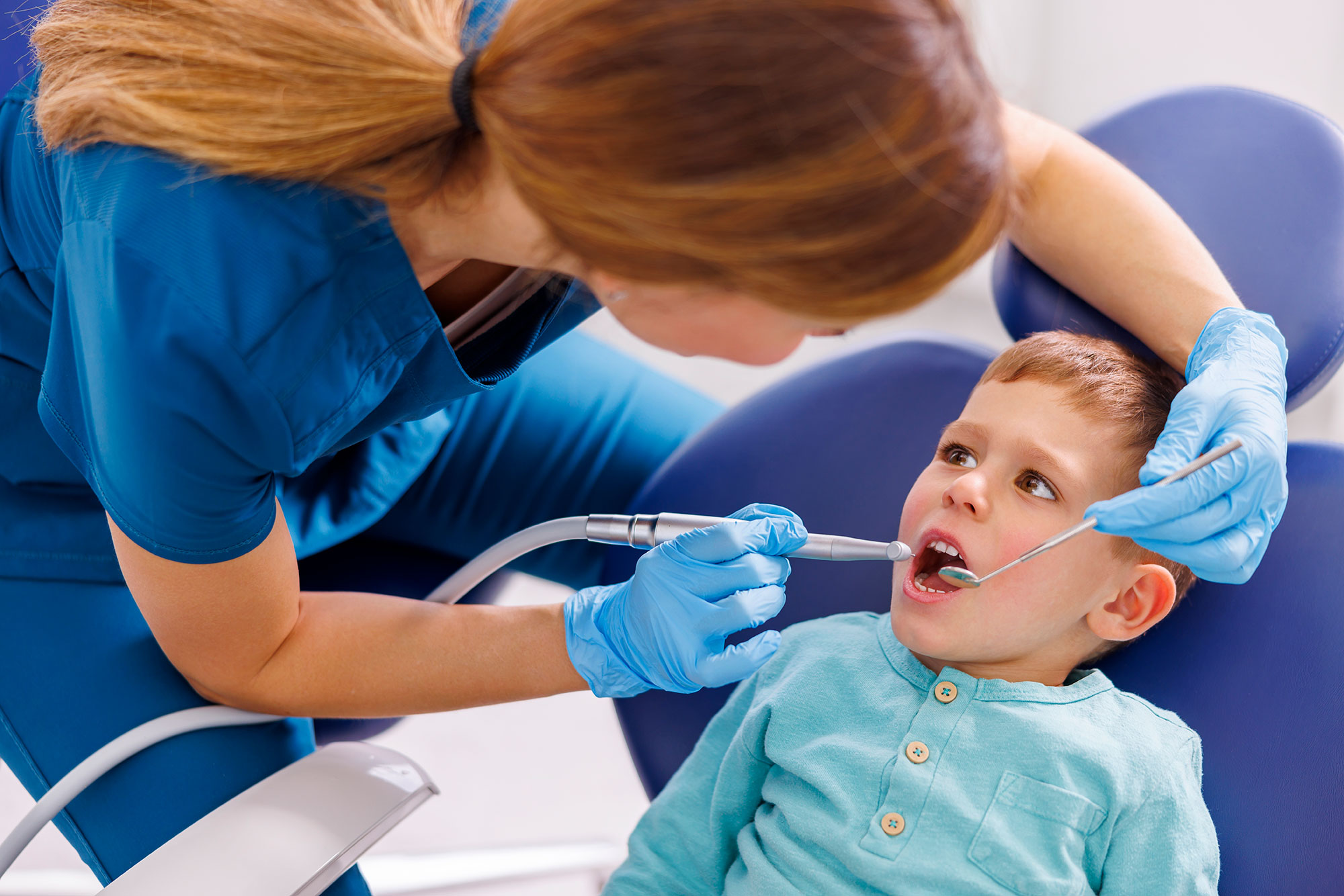
What Strategies Hurt and What Actually Helps With Pediatric Dental Fear
While some instinctive parental strategies help a child build trust and coping skills, many approaches accidentally reinforce fear. Understanding the difference gives parents a clearer path forward:
Common strategies that tend to backfire
- “Be brave” or “It won’t hurt” language – These phrases often create performance pressure or imply that pain is expected. If the child feels even mild discomfort, trust can erode quickly.
- Surprise appointments or withholding information – Avoiding advance notice may seem like a way to prevent anticipatory worry, but it removes the child’s sense of control.
- Distraction tactics – Distraction can help in the moment, but it doesn’t address the underlying fear.
- Rewards or bribes used as reassurance – Children often interpret rewards as proof that something frightening is ahead.
- Rushing through the appointment – Trying to “get it over with” can overwhelm a child’s nervous system and make future visits harder.
Common strategies to build trust
- Showing them what to expect – Offer simple explanations, visual schedules, social stories, or step-by-step previews ahead of time.
- Allowing them to make choices – Even small decisions, like choosing their toothpaste flavor or picking sunglasses, restore a sense of agency. A “stop signal” (like raising a hand) reassures them they can pause at any time.
- Gradually exposing them to the office – Short, low pressure visits to meet the dentist, sit in the chair, and practice opening wide help the child build familiarity.
- Staying calm as a parent – A calm tone and simple language help regulate the child’s nervous system, and neutral descriptions (“The dentist will count your teeth”) create safety.
- Offering sensory supports tailored to the child – Noise canceling headphones, sunglasses, weighted blankets and fidget tools can reduce sensory overload.
- Providing positive reinforcement – Celebrating small steps, like sitting in the chair or opening their mouth for a few seconds, helps build confidence.
How Pediatric Dentists Help a Scared Child
Pediatric dentists are trained to recognize the difference between typical worry and fear that’s interfering with care. Their approach is rarely about “getting the job done quickly” and much more about helping the child feel safe enough to participate.
From explaining each step before it’s taken to positive reinforcement and calm, predictable communication, a pediatric dentist employs a variety of clinical strategies.
And when paired with a parent’s calm, supportive presence, these allow most children to build trust over time. Many pediatric practices also intentionally reduce sensory load with dimmer lights, quieter tools, child-friendly décor, sunglasses, weighted blankets, or headphones — all of which help children who are easily overwhelmed. And for children with significant anxiety or sensory challenges, some dentists use systematic desensitization or collaborate with child psychologists or occupational therapists.
Finally, when fear or sensory overload makes routine care impossible, sedation can be a compassionate, appropriate option to prevent untreated decay, escalating treatment needs, or traumatic experiences.
A strong partnership between parents and the dental team is often the turning point for anxious children. It also sends a powerful message to the child: The adults are working together to keep them safe. Just remember: Fearful behavior is communication, not misbehavior, and progress is often slow but meaningful. Most children can learn to tolerate and eventually feel comfortable with dental visits when they’re met with patience, predictability, and a team that understands their needs.

Ready to find a pediatric dentist to help your child?
Book a consultation with a dentist near you today.