

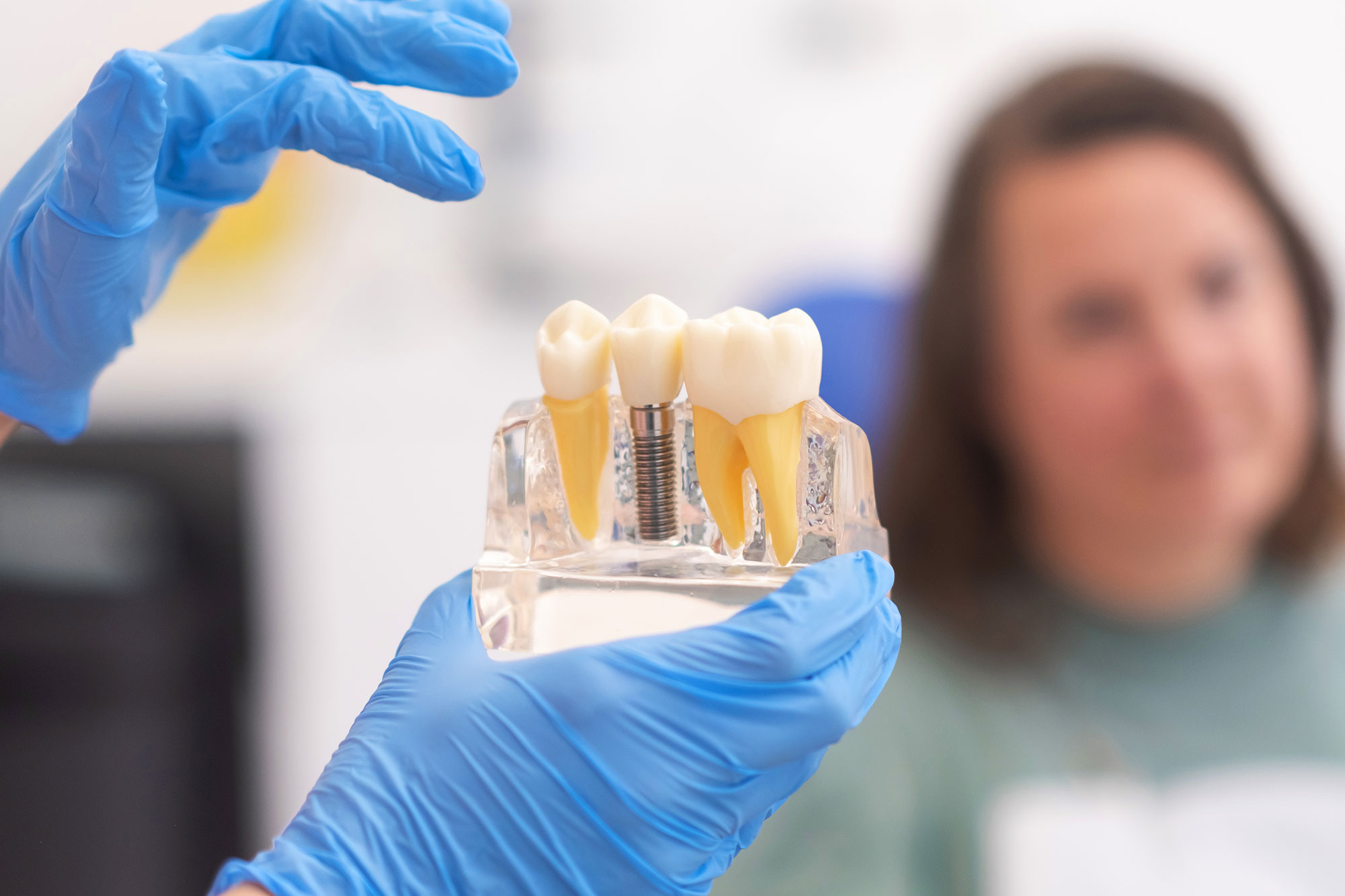
When patients see the sticker price of dental implants, they often wonder why they cost so much more than dentures or bridges. The answer is that unlike other tooth replacement options, dental implants look, feel, and function almost the same as the real thing—and can last decades if properly cared for.
Here, we’ll explain why, despite the expense and lengthy procedure timeline, dental implants are the best option for replacing missing teeth.
Dental Implants vs. Dentures vs. Bridges: Which One Lasts Longer?
Dental implants consist of a titanium screw that functions as a tooth root, capped by a crown that looks, feels, and functions as a natural tooth. Dental implants require a process that takes several steps to make them a permanent part of the mouth:
- Bone grafting. If the jawbone isn’t strong enough to hold an implant, a dentist takes bone material from another part of the body and adds it to the jawbone.
- Implant placement. Once the bone is strong enough, the dentist places the screw into it to serve as the “root” of the new tooth. Over the next several months, the bone grows around the screw to stabilize it (a process called Osseointegration).
- Abutment placement. Once the implant is firmly secured, a small connector is placed on the top of it, and the gums heal around it.
- Crown placement. Finally, the dentist creates a crown that matches the color, shape, and size of surrounding teeth and attaches it to the abutment.
A single dental implant costs around $1,600, but the titanium screw does not typically ever need to be replaced. Modern crown materials such as zirconia are very durable and resistant to fractures. While the dental crown replacement timeline varies depending on materials used and eating habits, they can last 20 years or longer with proper care.
Dentures are removable appliances that suction to the gums with adhesive. When properly fitted, they allow patients with multiple missing teeth to speak and eat normally, but they should be taken out for cleaning shortly after meals and soaked in a cleaning solution at night. Dentures cost around $1,600 for an entire upper arch, making them the most affordable tooth replacement option. However, they do not stimulate the jawbone when chewing as natural teeth do, since there is no root embedded into the bone. When the body recognizes the bone is no longer useful, it begins to resorb it, causing the jawbone to deteriorate. This changes the way dentures fit and can make them loose, so they need to be replaced after 5-10 years.
A dental bridge is a non-surgical procedure in which a false tooth is anchored between two permanent teeth to fill in a missing space. Because it floats above the jawbone, bone loss is also a concern as it can cause surrounding teeth to shift —changing the way the bridge fits. In addition, eating hard, crunchy, and chewy foods can damage a bridge and surrounding teeth over time. A traditional bridge can cost upwards of $3,000 and typically lasts 5-15 years.
How Long Dental Implants Last in Comparison to Non-Surgical Options
The following includes estimated prices without dental insurance. Cost will vary depending on a patient’s insurance plan.
| Dentures | Dental Bridges | Dental Implants | |
| Cost | $1,600 per arch | $2,500 per 3-piece bridge | $1,600 per tooth |
| Longevity | 5-7 years | 5-15 years | 20+ years |

Factors Affecting Dental Implant Longevity
Although dental implants are capable of lasting for decades, several factors come into play when determining their lifespan:
Bone health. Implant posts must be able to integrate into the jawbone to become stable. Osteoporosis, which affects the density and strength of bones throughout the body, can weaken the jawbone and impact this process. For these reasons, it’s important for patients with poor bone health to work with a dentist experienced in implants and osteoporosis, as there may be medication and lifestyle adjustments required to maintain the implant’s stability.
Oral hygiene. Brushing, flossing, and regular dental cleanings are just as important with implants as with natural teeth. When bacteria builds up around implants, it’s likely to cause tooth and gum decay, which can eventually damage the bone supporting the implant if not addressed.
Teeth grinding (Bruxism). After implants are initially screwed in, they need time to heal and integrate with surrounding bone tissue. Grinding or clenching teeth puts pressure on the implants, preventing osseointegration from occurring as it should. Because this can ultimately lead to dental implant failure, it’s important that patients take measures to stop teeth grinding such as by wearing a mouth guard at night, and reducing stress.
Lifestyle habits. Smoking restricts blood flow and increases inflammation, which hinders the osseointegration process needed for implants to stabilize. Patients considering implants should stop smoking prior to the procedure to improve the dental implant’s longevity.

How Long Do Dental Implants Really Last? Talk to a Dentist for Personalized Guidance
The best way to ensure your dental implants last as long as possible is to discuss your oral health with an experienced dentist. He or she will examine your mouth to determine if implants are the best tooth replacement option, and make recommendations for how to extend their lifespan.
To make an appointment near you, click here.