

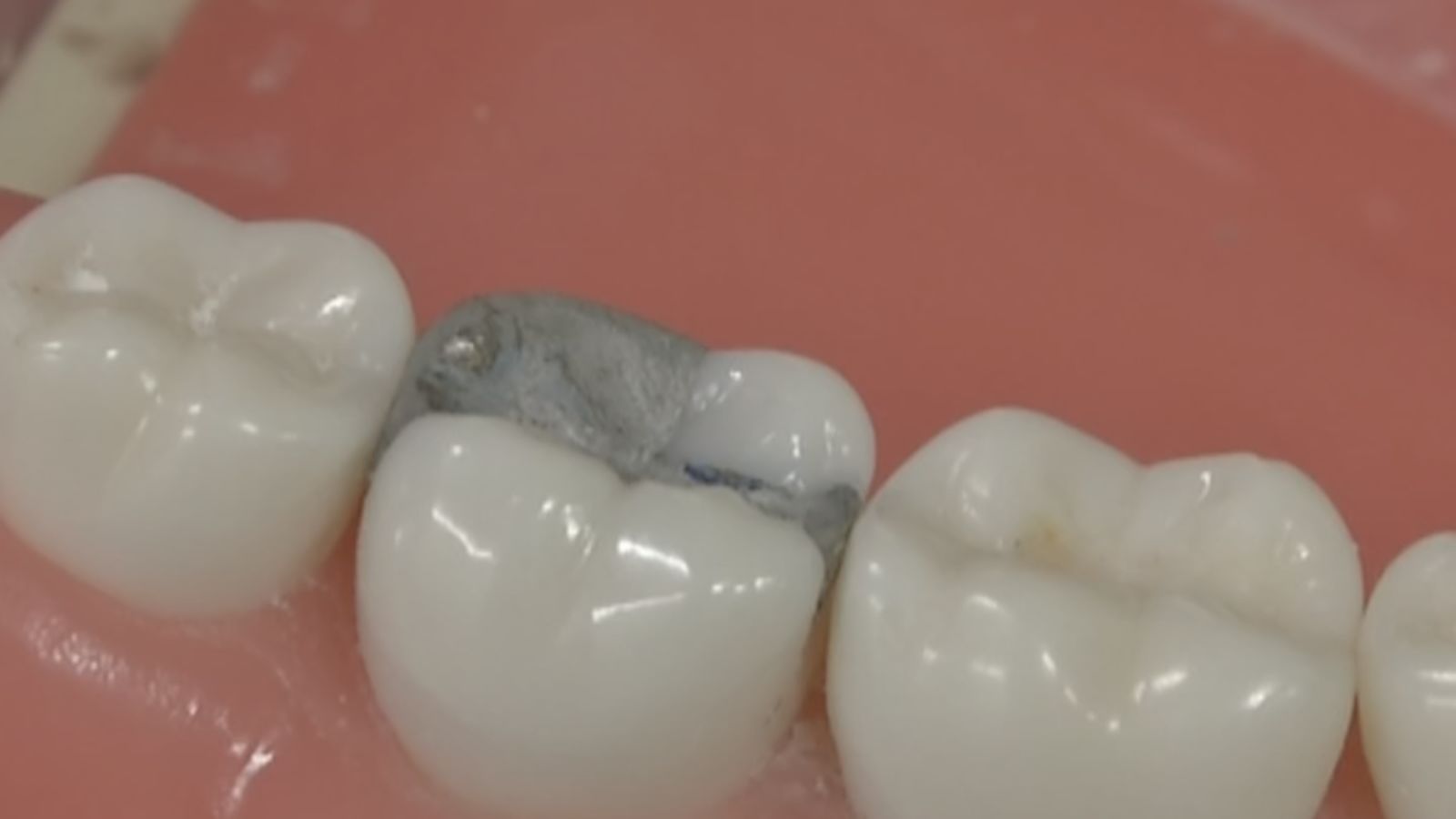
There’s a lot of conflicting information surrounding amalgam dental fillings, particularly about their safety. From 2017 to 2023 the use of dental amalgam has declined from 21.8% to 4.1%. This is partially due to the environmental effects of mining the mercury used in amalgam fillings, and because people generally prefer fillings that are tooth-colored.
However, there are several things to consider when it comes to choosing a dental filling material or whether to replace amalgam fillings you already have. Before making a decision, it’s best to take a deeper dive into what risks are actually associated with amalgam fillings, filling alternatives, and what happens when they are replaced.
What Are Amalgam Fillings?
Amalgam fillings, sometimes called silver fillings, are metal dental fillings composed mostly of mercury mixed with silver, tin, copper, and zinc. Amalgam has been used for over 150 years for filling dental cavities.
Amalgam fillings are generally long-lasting, durable, and cheaper than other materials. However, they are dark silver in color, which looks unnatural on teeth.
How Long Do Amalgam Fillings Last?
Amalgam fillings usually last around 10-15 years, but may last longer with good oral hygiene. This is longer than porcelain or resin composite fillings. However, gold fillings are the most durable option, potentially lasting up to 30 years.
Amalgam vs. Composite Safety: Which is safer?
Because fillings will be in your mouth for many years, there is often concern about the effects of certain materials over time. The materials in both amalgam fillings and composite resin fillings have been subject to suspicions regarding their safety. However, much research has been conducted on these materials, and the general conclusion is that they are both rather safe.
Amalgam Filling Safety
While mercury is a toxic substance on its own, the mercury in amalgam fillings is bound to the other metals it is mixed with. It has been shown that these fillings do leak very small amounts of mercury vapor, but the amount is far lower than daily recommended levels. A patient is exposed to the most mercury vapor during placement and removal of the amalgam fillings.
Many official health organizations, such as the FDA, the International Association for Dental, Oral, and Craniofacial Research, and the American Dental Association, have stated that amalgam fillings are safe and effective.
Still, the FDA recommends that certain higher-risk groups should avoid dental amalgam fillings when possible. These groups include:
- Pregnant women, nursing women, and infants
- Children under age 6
- People with neurological diseases, such as Alzheimer’s or Parkinson’s disease
- People with impaired kidney function
- People with allergies to mercury or other metals
While the FDA does not recommend using amalgam in new fillings for people in these categories, they also note that there has not been enough research about the potential health effects of mercury vapor exposure from dental amalgam. Those that already have amalgam fillings should talk to their doctor and dentist for a full assessment of their situation.
Composite Resin Safety
Composite resin is the most popular modern material choice for dental fillings due to its low cost and ability to match tooth color. Over the years, there have been some concerns about the release of chemicals, like BPA, in composite resin fillings over time. However, not all composite resin fillings contain BPA and materials for composite resin filling are always being improved.
One study found no differences in kidney function, neurological function, neuropsychological function, psychosocial function, or physical development of children who received either amalgam or composite fillings. Another study found a higher risk of filling failure and secondary tooth decay with composite fillings, compared to amalgam.
Overall, composite fillings are considered safe, and most people who get them do not experience any side effects. In rare cases, a patient may have an allergy to the materials.
For most people choosing between amalgam vs composite, the risk for either is very low. The choice for many people comes down to other factors, like availability, appearance, cost, and longevity. It’s important to note that waiting to get a filling or opting not to get one can cause further decay, pain, and the need for more extensive dental work.
Should You Replace Amalgam Fillings?
All fillings should be replaced before they begin to show signs of deterioration or failure. Signs that you may need to replace your amalgam fillings include:
- Pain or sensitivity around the filling
- Gray or black staining around the edge of the filling
- Any feelings of movement or looseness
- Cracking or other damage to the filling
- The filling fell out
If you already have amalgam fillings, aren’t experiencing any issues, and you’ve had them for less than 10-15 years, there is likely no need to replace them. Doing so may only lead to additional unnecessary mercury vapor exposure. An exception may be for those in the high-risk categories mentioned above. However, it’s best to talk to a dentist about whether replacing amalgam fillings is right for you.

Are There Other Material Options for Replacing Amalgam Fillings?
There are several materials used for tooth fillings. Aside from composite resin (which is most common) and amalgam metal, many dentists offer:
- Ceramics and Porcelain – These fillings are very safe and designed to match surrounding teeth. They can last up to 25 years and are more resistant to stains and abrasions than other options.
- Gold – Gold fillings are also a composite of gold and other metals, such as nickel or chromium. Gold fillings are durable and long-lasting, but expensive and do not match natural teeth. Patients with metal allergies should avoid gold fillings.
- Glass Ionomer – These fillings are made of a flexible paste and used as temporary fillings for baby teeth. They slowly release fluoride over time, helping to prevent future cavities. Negative effects include their lack of durability compared to composite and amalgam fillings. They are also used as temporary fillings in an adult mouth to prepare for later restorations.
How Much Does It Cost to Replace Metal Fillings?
How much it costs to replace metal fillings will depend on what kind of material it is being replaced with. In many cases, insurance will cover all or some of the cost. For those without insurance, the cost for a typical dental filling replacement is similar to the cost of an initial filling. On the cheaper end, amalgam fillings can cost between $50-$150 and composite fillings between $90 to $250, while a gold filling can be well over $1000.
What is the Process for Replacing Amalgam Fillings?
The process for replacing amalgam fillings is similar to the process for replacing any fillings, with a few differences. Additional precautions are taken, because breaking up and removing amalgam can result in more mercury vapor to be released than normal. The process typically involves:
- Numbing the gums around the tooth with local anesthetics, so the patient does not feel any pain.
- The amalgam material is carefully broken up and removed with specialized devices. High-volume suction tubes help minimize mercury vapor exposure. Typically, a dentist will use protective gear, like goggles, a face shield, and dental dam—a thin, flexible sheet of latex or polyurethane used as a protective barrier in the patient’s mouth. A material that helps absorb mercury may also be placed in the mouth. Some offices may also use air filtrations systems.
- After the amalgam is removed, the dentist will clean out the space and make sure there is no decay in the tooth.
- The new material is placed into the tooth, dried, and then shaped to fit the patient’s bite.
Talk to a Dentist About Your Options
Everyone’s situation is different, and there is no catch-all answer to what kind of filling is best. Whether you’re trying to decide whether to get an old silver filling replaced or trying to decide what filling material to get, a dentist will always know best. Try our dentist-finding tool to find a dentist near you and book an appointment.